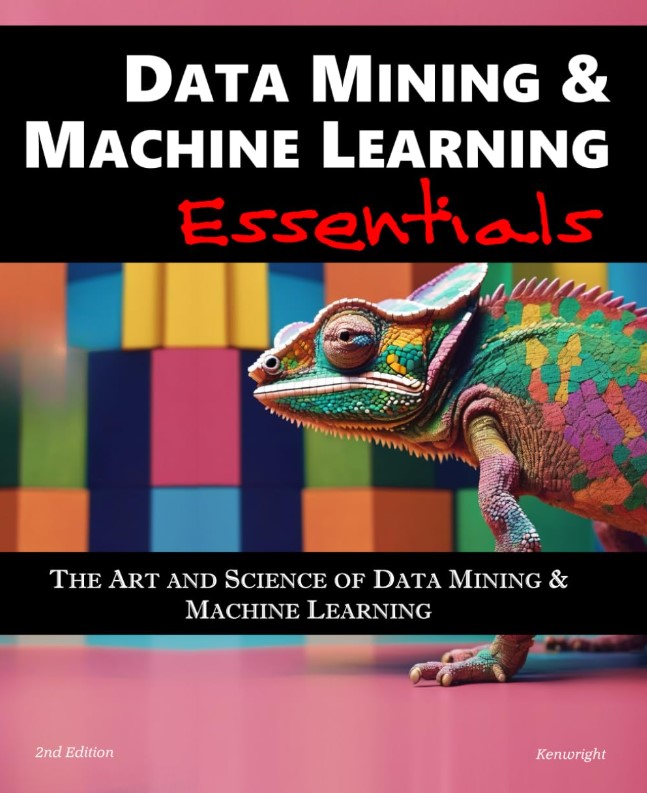
An transformative journey into machine learning, "Data Mining and Machine Learning Essentials" explores its profound influence on the digital frontier. With clarity and enthusiasm, this essential read delivers fresh perspectives and actionable insights that inspire curiosity and spark meaningful progress.
The author's passion for the subject shines through every chapter, offering readers a refreshing mix of technical rigor and creative inspiration. With a strong emphasis on real-world relevance, "Data Mining and Machine Learning Essentials" equips readers with tools and insights to thrive in today's fast-evolving landscape of . This book stands out for its uplifting tone and empowering approach to , making even the most complex topics feel approachable and exciting.
I recommended this book to my entire team—and the results were immediate. Our workflow is sharper, our thinking more strategic.
A brilliant fusion of theory and practice. The case studies alone offer invaluable lessons that stick with you.
That section was brilliant. I've already applied those techniques with great success in my current projects.
December 8, 2025
The author's tone is confident yet welcoming, making even the most technical concepts feel approachable and empowering.
I appreciated the way each chapter ended with reflection prompts—it encouraged me to apply what I learned right away.
November 30, 2025Stay updated with the latest in tech literature
2025 Maya Angelou Book Award winner Alison C. Rollins joins co-hosts Whitney Terrell and V. V. Ganeshananthan to discuss her 2024 poetry collection Bl...
Read MoreAn excerpt from House of Day, House of Night by Olga Tokarczuk Krysia from the Cooperative Bank in Nowa Ruda had a dream. It was early in the spring o...
Read MoreJenny Hamilton reviews Eden Royce's "beautiful, spooky, and deeply heartfelt" novella. The post Horizons Beyond Grief: <i>Psychopomp and Circums...
Read MoreEnhance your reading and learning experience
Take brief notes after each chapter. Summarizing helps cement knowledge.
Use a pointer or your finger to guide your eyes. This can increase reading speed by 25%.
Follow the 20-20-20 rule: every 20 minutes, look at something 20 feet away for 20 seconds.
Use the Feynman Technique: teach what you learn to someone else to identify knowledge gaps.
Write documentation as if the next person reading it is a violent psychopath who knows where you live.
Organize books by color for visual appeal or by genre for practical access.
Sarah Johnson
Professional ReviewerCouldn't agree more. The real-world examples made all the difference for me—they brought the theory to life.
December 4, 2025